
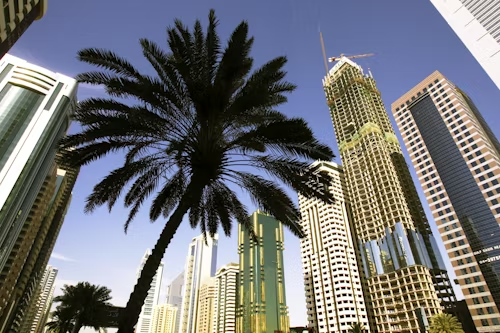
People have been predicting a Dubai property correction for as long as there has been a Dubai property market. The prediction keeps not arriving in the way it was described. Meanwhile, the city’s population keeps growing, the rental market keeps tightening, and investors who dismissed it ten years ago have watched buyers who embraced it accumulate returns greater than those available in the markets they chose instead.
That is not an argument that Dubai is without risk. Every market has risk. It is an argument that the dismissal of Dubai as an investment destination has consistently been wrong, and understanding why is more useful than repeating the dismissal.
The Yield Story Holds Up Under Examination
Gross rental yields in Dubai sit between five and nine percent depending on location, property type, and management approach. In most developed property markets the comparable number is two to four percent before tax. The gap is real, and it compounds. An investor holding a Dubai asset for ten years at seven percent gross yield is in a fundamentally different position from one holding a comparable London asset at three percent.
Add the absence of income tax on rental returns, no capital gains tax on disposal, and a transaction cost structure that is lower than most comparable markets, and the arithmetic keeps moving in the same direction. These are not promotional claims. They are numbers that any investor can verify and most who look at them seriously end up taking seriously.
Off Plan Property Is Where the Entry Advantage Lives
The investors who have done best in Dubai over multiple cycles share a pattern. They bought off plan property from the right real estate developer Dubai, in a location where demand was being underserved, before the rest of the market caught up to what was being built there. By the time the project was completed and comparable ready units were priced in, the early buyer had already captured the appreciation.
Off plan property also allows investors to deploy capital gradually across the construction period rather than as a single upfront commitment. A ten percent deposit followed by construction-linked installments spreads the investment while the asset appreciates. For investors working with capital that needs to be deployed efficiently across a portfolio, that flexibility matters.
The regulatory framework around off plan property has changed significantly since the early boom years. RERA registration, mandatory escrow accounts, and construction-linked payment releases are required. The structural risk that defined off plan purchases before 2008 has been substantially reduced. It has not has been eliminated, and developer selection still matters enormously. But the investor who does their homework on the real estate developer Dubai, behind the project, is working in a much better protected environment than any previous generation of Dubai property buyers.
Population Growth Is Not a Marketing Statistic
Dubai’s population has grown from around one million in 2000 to over three million today. The trajectory is not flattening. The city is actively attracting a new category of resident, remote workers; high-net-worth individuals relocating from European tax environments; and professional migrants from across the region and beyond, which did not exist in previous waves of growth.
Every one of those new residents needs somewhere to live. The rental market reflects population growth with a directness that is easier to observe here than in more opaque markets. Vacancy rates in well-located residential assets stay low because the demand replacing each departing tenant is real and consistent.
What Invest in Dubai Actually Means in Practice
The decision to invest in Dubai was not a single one. It is a series of them. Which part of the market? Which real estate developer, Dubai? Ready or off plan. Hold for yield, hold for capital appreciation, or both. Long-term rental or short-term. The answers depend on the investor’s capital position, timeline, and appetite for management involvement.
The market provides a mix of returns, tax benefits, legal safety, and growth potential that most places can’t offer all at once. That is what keeps drawing buyers back and what keeps producing the same result for investors who approach it with appropriate rigor.
The city is not finished. That is either a risk or an opportunity depending on which way you are looking at it. The investors who have done well here have consistently looked at it the second way.