
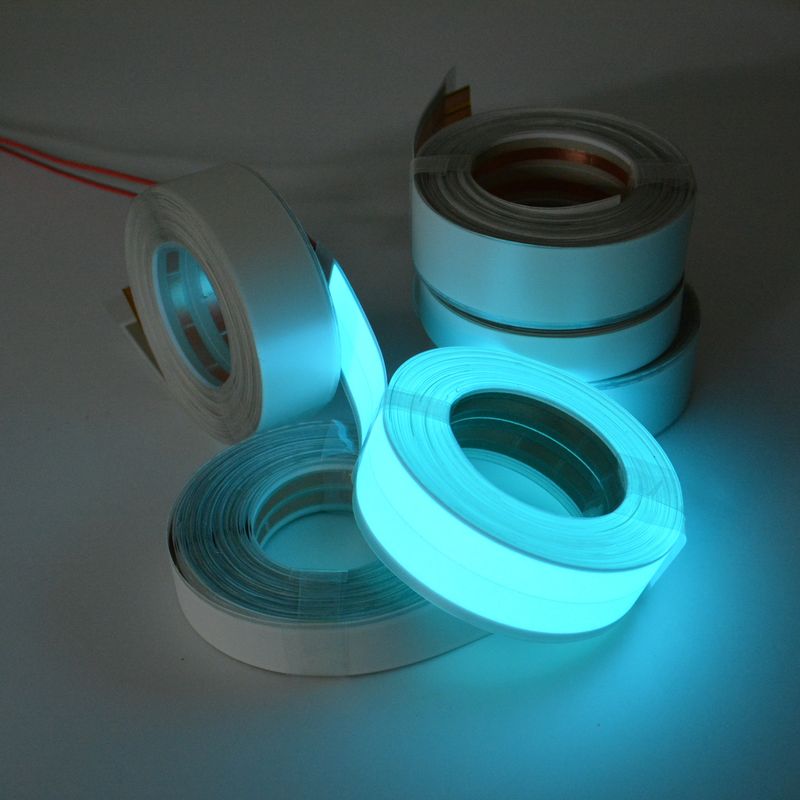
The quiet revolution in interior illumination is being led not by grand chandeliers or oversized pendants, but by an array of refined, compact pieces often grouped under the banner of the micro lighting movement. From discreet puck lights tucked beneath cabinetry to elegantly slender pendants that hover like jewelry above a countertop, these designs prove that scale has little to do with impact. Today’s homeowners and designers can browse entire collections of modern light fixtures that embrace minimal footprint yet deliver maximum presence, offering a new vocabulary for sculpting mood and highlighting architectural detail.
A key driver behind this trend is the growing popularity of design‑forward online marketplaces such as Voghion, where artisans and global brands alike showcase fixtures that combine cutting‑edge LED technology with meticulous craftsmanship. By curating luminaires whose silhouettes are often no larger than the palm of a hand, these platforms make it easy to re‑imagine illumination as an intentional layer of décor rather than an afterthought. Whether updating a studio apartment or elevating a spacious loft, micro lighting offers a richly flexible toolkit that transcends conventional notions of scale.
What Defines Micro Lighting?
Micro lighting does not have a rigid size threshold; rather, it refers to fixtures specifically engineered to occupy minimal visual and physical space while providing targeted, high‑quality light. Mini spotlights, slim batten LEDs, recessed pinhole downlights, wafer‑thin wall sconces, and petite track heads all fall under the umbrella. The common denominator is restraint—each piece is reduced to its essential form, often hiding the heat sink and driver within an impossibly small housing to maintain a sleek silhouette.
This deliberate reduction serves two purposes. First, the absence of bulk allows light itself to become the star: beams are clean, shadows crisp, and glare meticulously controlled. Second, the modest dimensions grant designers the freedom to deploy multiple points of illumination without visual clutter. An art wall, for example, can be grazed by a constellation of match‑stick‑thin spots, each angled precisely to reveal texture and pigment, producing a gallery‑level effect that would be impossible with bulky cans.
Why Now? Cultural and Technological Catalysts
Several converging forces have propelled micro lighting from niche experiment to mainstream must‑have. On the cultural side, the ascendancy of minimalist and Scandinavian design aesthetics prizes negative space, light finishes, and the absence of ornament. Smaller fixtures dovetail perfectly with interiors that rely on quiet gestures rather than grand statements. Simultaneously, urban densification has created living spaces where ceiling heights and square footage demand furnishings and accessories that are visually lightweight.
Technologically, high‑efficacy LEDs continue to shrink while delivering exponentially greater lumens per watt. Miniaturized drivers with advanced thermal management keep temperatures within safe limits despite tight enclosures. Optical breakthroughs—think collimating lenses and micro‑prismatic diffusers—allow tiny sources to punch far above their weight class, offering beam spreads from razor‑sharp 10‑degree spot to generous 60‑degree flood. The result: micro fixtures that rival or outperform their full‑size counterparts in output and color rendering, sometimes exceeding 95 CRI for true‑to‑life tones.
Architectural Integration: Lighting as an Invisible Layer
One of the most compelling aspects of micro lighting is its ability to vanish, allowing ceilings and walls to remain pristine. Recessed pinhole downlights, for instance, present as nothing more than a pencil‑eraser‑sized aperture, yet wash a foyer with warm, uniform illumination. Cove and slot lights, concealed within millimeter‑thin channels, bathe surfaces in indirect glow without visible hardware. This is particularly valuable in heritage restorations, where ornate plasterwork or timber beams must remain untouched, or in contemporary spaces that rely on planes of uninterrupted material for their wow factor.
Even when fixtures are surface‑mounted, miniaturization minimizes visual intrusion. Magnetic track systems, scarcely thicker than a smartphone, accommodate a range of plug‑in spots and pendants that can be repositioned at will. The track itself reads like a subtle shadow line on the ceiling, empowering homeowners to change art displays or furniture layouts without calling a contractor.
Layering Light for Human Well‑Being
Beyond aesthetics, small‑scale fixtures excel at layered lighting—the practice of blending ambient, task, and accent illumination to support both functional needs and emotional comfort. Because micro fittings can be tucked into niches, under shelves, and inside cabinets, they add nuanced layers where traditional sources cannot reach. A kitchen can feature softly back‑lit toe kicks for nighttime orientation, pinpoint spots over the sink for chores, and a delicate row of mini‑pendants for social gatherings—all controlled separately for circadian‑friendly scenes.
Moreover, many micro fixtures now ship with tunable white or full‑spectrum RGBW capabilities, enabling users to modulate color temperature from cool daylight that heightens alertness to warm candlelight that signals relaxation. Integrated Bluetooth mesh or Zigbee chips simplify app control, while emerging standards such as Matter promise interoperability across brands.
Sustainability: Small Size, Reduced Footprint
Micro lighting’s diminutive housings translate directly into lower material consumption—less aluminum for heat sinks, less polycarbonate for lenses, and smaller packaging for transport. The efficiency gains of modern LEDs, often exceeding 120 lumens per watt, reduce energy use over the life of the product. Some manufacturers even offer replaceable light engines so that when diode arrays eventually depreciate, the housing can remain in service, minimizing e‑waste.
In renovation scenarios, tiny fixtures often require shallower cutouts and slimmer junction boxes, reducing structural impact on historic buildings. Builders appreciate the ease with which small housings thread through insulation or limited plenum space, speeding installation and lowering labor costs.
Tips for Selecting Micro Fixtures
- Define the Purpose – Clarify whether a fixture is providing general illumination, task lighting, or accent. A mini wall washer should have a wide, uniform beam, while a picture light may call for an elongated asymmetrical output.
- Check Optics – Quality micro fittings employ high‑precision reflectors or lenses. Look for photometric data showing cutoff angles and field‑to‑beam ratios to ensure glare‑free performance.
- Mind the Color – Aim for 90+ CRI where color fidelity matters, such as kitchens or art walls. For living rooms, a dim‑to‑warm feature that shifts from 3000 K to 1800 K can mimic incandescent ambience.
- Consider Control Ecosystems – Decide early if you want voice integration, app scenes, or basic wall dimmers. Choosing fixtures and drivers from the same protocol family (e.g., DALI, Casambi, Lutron) prevents compatibility headaches.
- Plan the Layout – Because micro fixtures emit concentrated beams, spacing and aiming become critical. Use manufacturer‑provided AGi32 or Dialux files to visualize foot‑candles before cutting any holes.
Real‑World Applications
Residential – In a compact London flat, designers recessed 20 mm‑diameter downlights in a staggered pattern along a white ceiling, creating a starry‑night effect that feels both playful and sophisticated. Under‑cabinet strip LEDs just 6 mm wide slip beneath floating shelves, illuminating cookbooks without visible diodes.
Retail – A boutique sneaker store in Berlin suspended a grid of micro track heads only 30 mm in diameter. Each shoe receives its own tight 15‑degree spotlight, intensifying the sense that every item is a collectible artifact. The track’s matte‑black profile disappears against a charcoal ceiling.
Hospitality – A boutique hotel lobby in Kyoto integrates finger‑width light slots within wall panel reveals, guiding guests toward check‑in while subtly accentuating warm wood grain. The micro luminaires are so unobtrusive that first‑time visitors often attribute the glow to daylight.
Future Directions: Nanostructures and 3‑D Printing
Research labs are experimenting with nano‑textured surfaces that manipulate photons, promising even slimmer optics. Meanwhile, additive manufacturing is allowing bespoke micro housings with organic curves that were impossible through machining. Imagine ordering a pendant sized like a tea‑light, 3‑D printed in recycled titanium lattice, paired with a lens etched at sub‑micron scale to project intricate patterns on a dining table—a fusion of art and science born directly from the micro lighting ethos.
Wireless power transfer is another frontier. Prototypes already demonstrate ceiling panels that broadcast low‑voltage current, allowing magnetically attached luminaires to light up without visible wiring. Such systems could free designers from fixed junction boxes entirely, turning every surface into a potential canvas for illumination.
Conclusion: Thinking Big by Designing Small
The micro lighting movement embodies a paradox familiar to many design revolutions: reducing form to amplify effect. By shrinking housings and elevating optical precision, today’s makers invite us to experience light as an adaptable material—one that contours space, influences mood, and spotlights stories without distraction. Whether through a discreet puck that kisses a countertop with warm glow or a whisper‑thin slot that reveals the texture of reclaimed brick, small‑scale fixtures offer outsized opportunities to craft memorable environments.
Investing in these luminaires requires thoughtful planning and a discerning eye, yet the payoff is profound. Spaces feel cleaner, ceilings lighter, and architectural details freshly revealed. As LEDs evolve and control systems mature, micro lighting will only grow more powerful, expressive, and sustainable. Designers and homeowners who embrace this trend now will find themselves at the forefront of a new era—one where lighting no longer hangs overhead as an afterthought but lives intimately with us, scaled to human touch and tuned to human experience.
Ask ChatGPT