
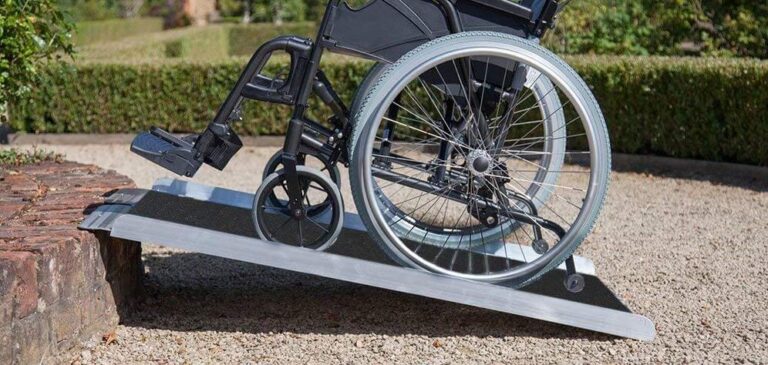
When improving accessibility at home, one of the first things that often comes to mind is wheelchair ramps. It’s essential to select the right one, whether accommodating a short-term mobility need or looking for a long-term solution.
In this article, we’ll discuss the two main types of wheelchair ramps: temporary and permanent. By understanding the benefits of each, you’ll be equipped to make the right choice for your property and lifestyle and create a safe and welcoming entryway that meets your needs.
Temporary Wheelchair Ramps
- Best For
Temporary ramps excel in various situations where flexibility is key. If you’re recovering from surgery or staying in a rental property or a smaller home, these ramps provide a quick and easy way to enhance accessibility without altering the space.
They’re also an excellent choice for accommodating guests, ensuring everyone can explore your home comfortably. Plus, if you’re planning renovations or need a solution for a special event, temporary ramps can be set up quickly.
- Cost
If you only need a ramp for a short period, renting is often far more economical than committing to permanent construction. It lets you access high-quality, ADA-compliant solutions and save on maintenance and installation costs that come with a more permanent structure. This flexibility means you can adapt your accessibility solutions to your ever-changing needs without breaking the bank.
- Materials
Most temporary ramps are crafted from lightweight materials like aluminum and rubber, which makes them easy to transport and ensures they can be swiftly assembled or disassembled as needed. This lightweight design is crucial for those who may not have someone to help them move the ramp.
- Installation
Unlike heavier options that require extensive modifications, temporary ramps can be set up in just a few hours by trained service providers. This means you’ll have a sturdy and reliable access solution without the stress of a lengthy installation process. Additionally, once you no longer need the ramp, the company will handle the removal, so you won’t have to worry about storage or maintenance.
- Customization
With temporary wheelchair ramps, the customization options are somewhat limited. However, you’ll still find a variety of modular designs that can be fitted to your needs.
While these ramps may not offer the same level of bespoke features as a permanent structure, their versatility in size and configuration can be quite handy. You can easily choose from different heights and widths to ensure they complement your entryway.
Permanent Wheelchair Ramps
- Best For
If you have ample outdoor space and want to make a lasting investment in your home’s accessibility, a permanent ramp is an excellent choice. They seamlessly integrate with porches, decks, and entrances, creating a polished look that complements your home.
- Cost
Permanent ramps typically require a higher upfront cost than temporary options, but think of them as a brilliant addition to your home. Their durability means fewer replacements down the line, leading to significant savings. Plus, a well-designed permanent ramp can enhance your property’s value, making it a worthwhile investment.
- Materials
Typically, permanent ramps are constructed from robust materials like wood and concrete. These options withstand the test of time and heavy usage, ensuring that your ramp remains a reliable means of access for years. Aluminum is another excellent choice, offering a lightweight yet strong solution that resists rust and corrosion.
Composite materials are also gaining popularity, providing a low-maintenance, aesthetically pleasing option. Each material has advantages, so it’s essential to consider factors like your climate, the ramp’s intended use, and how it blends with your property’s design.
- Installation
The installation process for permanent ramps requires careful planning and expertise. Specialists will evaluate your space to determine the best ramp style and location, considering factors like slope, structural support, and local building codes.
The correct measurements and materials are essential for stability and longevity, guaranteeing that your ramp will withstand daily use. Plus, with expert installation, you can be sure that everything is up to ADA standards, providing peace of mind for you and your loved ones.
- Customization
Unlike their temporary counterparts, permanent ramps can be designed to fit your home’s layout and complement its overall aesthetic. You can pick the colors, style, and materials, ensuring that your ramp feels like a seamless extension of your property.
With careful consideration of accessibility standards, you can create a safe and stylish ramp. Adjust the width, slope ratio, and handrail design to suit your mobility device and comfort level.
Final Thoughts
Whether you opt for temporary or permanent wheelchair ramps, the goal remains the same: to enhance accessibility and create a welcoming environment in your home. Embracing these changes can make a more inclusive and comfortable living space for everyone.
If you’re feeling overwhelmed by the options, contact a mobility aid supplier. They can provide a personalized assessment and expert recommendations so you can find the perfect solution tailored to your needs. With the right ramp, you can enjoy both safety and style in your entryway!

